Folding Magnifier-Aluminum Case Manufacturer,Supplier and Exporter in India
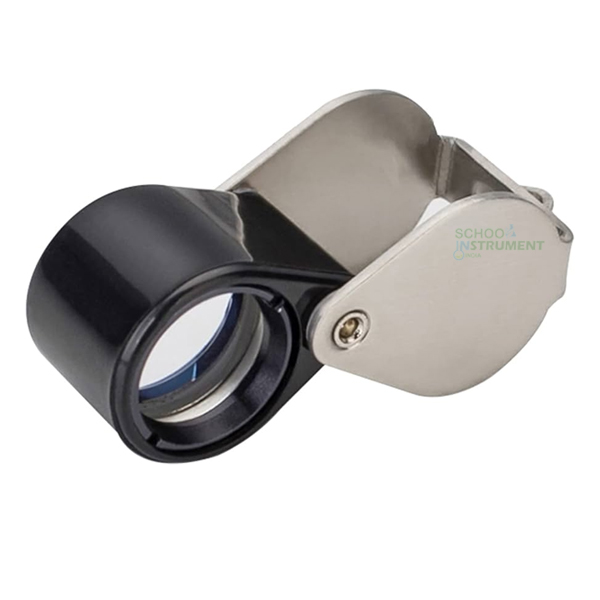
Product Code : SCL-M-11554
The Aluminum-Encase Folding Magnifier is a ruggedized
optical instrument engineered for high-resolution field inspection and specimen
classification. Optimized for Secondary, Vocational (TVET),
and University field biology and mineralogy curricula, this 10x
magnification system utilizes a calibrated glass lens to meet ISO 9001:2015 quality benchmarks. It facilitates
durable, portable visualization for university-preparatory morphological
studies.
Technical Specifications
|
Tender Specification |
OEM Technical Detail |
|
Material Grade |
Optical Glass (Lens) /
Anodized Aluminum (Case) / Impact-Resistant Polymer (Frame) |
|
Magnification Power |
10x Calibrated |
|
Lens Diameter |
25 mm |
|
Housing Geometry |
Folding pocket-architecture
with protective swing-away enclosure |
Key Pedagogical Outcomes
·
10x Calibrated Glass
Optical Element: Enables students to Evaluate micro-morphological traits in entomological
and botanical samples, supporting "Synthesis" of taxonomical data.
·
Swing-Away Aluminum
Protective Case: Supports the Application of field-based data collection, ensuring
hardware integrity during transit across diverse ecological environments and
reducing replacement cycles.
·
25mm Aperture
Precision Surface: Allows students to Analyze surface relief and structural irregularities in
geological specimens, reinforcing Analysis of material
properties and lithology.
International Logistics & Compliance
This School Instrument is consolidated for international B2B
procurement via export-grade seaworthy crating (ISPM-15
compliant). Each unit is individually packaged in shock-absorbent
linings and vacuum-sealed to prevent aluminum oxidation or optical clouding
during maritime transit. Documentation provided to procurement officers
includes the Manufacturer’s Authorization Form (MAF), Certificate of
Quality (CoC), and User Manuals in English. The tropicalized design
is verified for structural and optical integrity in environments reaching 45°C and 90% Humidity, ensuring that the pivot
mechanism remains operational and the glass-to-polymer interface resists
thermal expansion in equatorial laboratory settings.