
Ecological Succession Kit Manufacturer,Supplier and Exporter in India
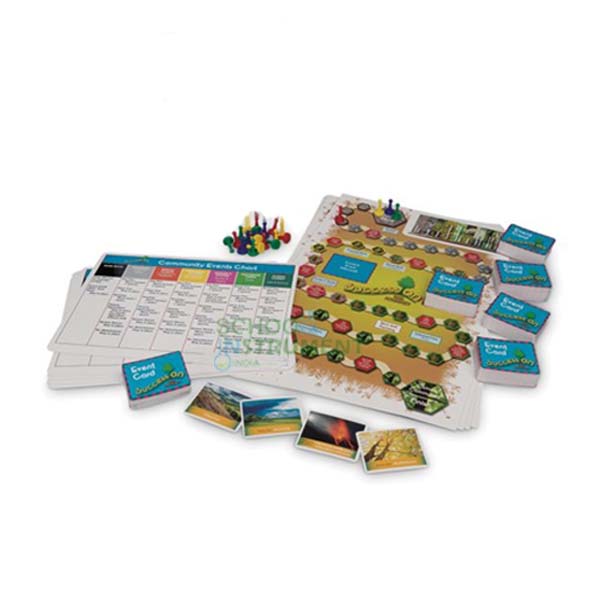
Product Code : SCL-EK-11071
Ecological
succession is the gradual, predictable process where the species composition
and structure of an ecosystem change over time.
As a premier global
manufacturer and exporter of scientific instruments and STEM setups, we
maintain complete ownership of our production facilities. This vertical
integration ensures a superior standard of educational equipment:
·
Integrated Quality Control: Every component of our ecology kits is manufactured
under ISO-certified protocols, ensuring that the physical models and simulation
materials withstand rigorous classroom use.
·
Direct-to-Institution Pricing: By operating our own factories, we eliminate middleman
markups, providing high-tier laboratory solutions at direct pricing for
educational ministries and private institutions.
·
Scientific Accuracy: Our product development team collaborates with
ecologists to ensure that every successional stage represented in the kit
aligns with current environmental data and historical records.
From Pioneer Species to Climax Communities
This kit serves as
a bridge between theoretical ecology and practical application. It is designed
to replace passive learning with a dynamic simulation of environmental shifts.
·
Primary Succession Simulation: Students navigate the transition from lithic substrates
(bare rock) to the establishment of soil-building pioneer organisms like Lichens.
·
Response to Disturbance: The module introduces stochastic "disturbance
events"—such as wildfires or anthropogenic impacts—allowing students to
analyze how Secondary Succession differs from initial colonization.
·
Climax Community Analysis: Advanced stages allow for the study of stable,
high-biodiversity ecosystems and the factors that maintain their equilibrium.
Scientific Context
Our
equipment allows for the exploration of complex ecological theories, including
the Intermediate Disturbance Hypothesis, which suggests that moderate levels of disturbance can
actually increase species diversity.
·
Facilitation and Inhibition: Students observe how early-successional species modify
the environment to either help or hinder the growth of later species.
·
Resource Competition: The kit models how light, nutrient availability, and
space become limiting factors as a community matures.
Research
and Academic Integration:
·
Explore seminal
papers on Community Assembly Rules via Google Scholar.
·
Review data on Post-Fire Forest Regeneration to understand the real-world
application of the "disturbance events" featured in this kit.


