Clear Plastic Magnifier, 3x, 6x Manufacturer,Supplier and Exporter in India
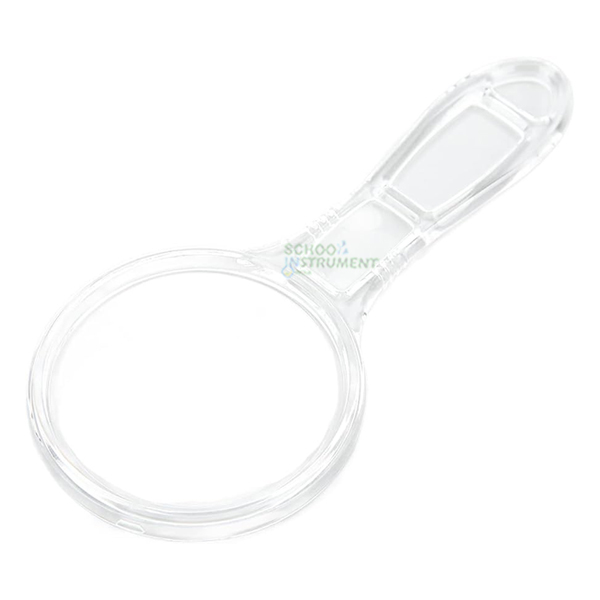
Product Code : SCL-M-11551
The Dual-Aperture Polymer Magnifier is a ruggedized optical
tool engineered for simultaneous macro-observation and detail-specific specimen
classification. Designed for Secondary and Vocational TVET
biology curricula, this 110mm instrument facilitates high-clarity inspection in
compliance with ISO 9001:2015 manufacturing
standards. It provides calibrated 3x and 6x magnification stages for
university-preparatory biological and geological modules.
Technical Specifications
|
Tender Specification |
OEM Technical Detail |
|
Material Grade |
Optical-grade
high-transmittance polymer |
|
Overall Length |
110 mm (4.50") |
|
Primary Lens Diameter |
50 mm (Calibrated for 3x
magnification) |
|
Secondary Lens Diameter |
20 mm (Calibrated for 6x
magnification) |
|
Chassis Type |
Monolithic clear plastic frame
with integrated dual-lens array |
Key Pedagogical Outcomes
·
50mm 3x Primary Lens:
Enables students to Analyze wide-field specimen morphology, facilitating
"Level 4: Analysis" of organ systems and mineral structures.
·
20mm 6x Inset Lens:
Allows students to Evaluate micro-anatomical traits and cellular textures,
supporting high-resolution identification in taxonomical classification.
·
Integrated Dual-Lens Architecture: Students Apply comparative
observation techniques by transitioning between magnification powers without
losing the specimen's spatial orientation, reinforcing "Level 3:
Application" of scientific methodology.
International Logistics & Compliance
This School Instrument is consolidated for international B2B
procurement via export-grade seaworthy crating (ISPM-15
compliant). To preserve optical clarity, each unit is
individual-sealed in anti-scratch protective sleeves and vacuum-packed with
desiccants to prevent polymer clouding during maritime transit. Documentation
provided to procurement officers includes the Manufacturer’s Authorization
Form (MAF), Certificate of Quality (CoC), and User Manuals in
English. The tropicalized design is verified for structural
stability in environments reaching 45°C and 90% Humidity,
ensuring the polymer remains non-tacky and maintains refractive index
consistency in equatorial laboratory settings.