Tuning Fork Activator, Rubber Manufacturer,Supplier and Exporter in India
Product Code : SCL-ELE-11925
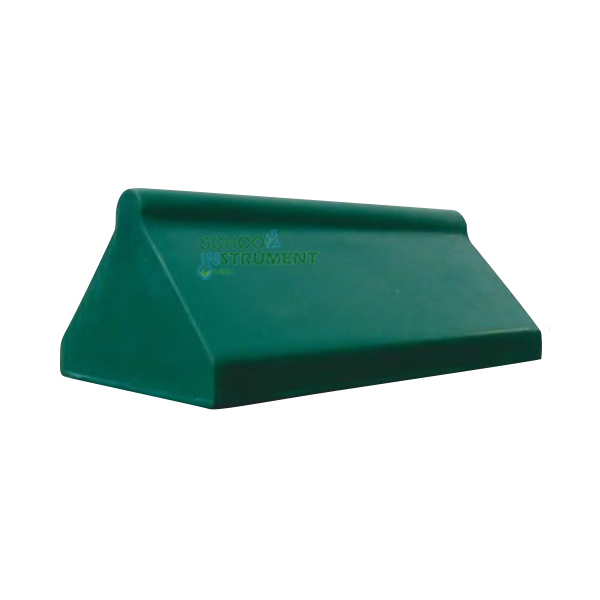
The Rubber Tuning Fork
Activator is engineered to provide a calibrated, non-destructive strike surface
for precision acoustic oscillators in University and Secondary physics
laboratories. Compliant with ISO 9001:2015 manufacturing standards, it ensures
consistent frequency excitation without damaging delicate tines. Optimized for
TVET curricula focused on wave mechanics, sound propagation, and harmonic
resonance.
Technical Specifications
|
Tender Specification |
OEM Technical Detail |
|
Material Grade |
Vulcanized High-Density
Natural Rubber |
|
Dimensions |
100mm x 60mm x 40mm |
|
Mechanical Properties |
Shore A Hardness calibrated
for non-marring impact |
|
Functional Utility |
Acoustic oscillator
excitation and kinetic-to-sonic energy transfer |
Key Pedagogical Outcomes
·
Calibrated
Elastomeric Strike Surface:
Allows students to generate clean, fundamental frequencies without audible
overtones or structural damage, supporting "Harmonic Motion and Frequency
Analysis" modules.
·
100mm
x 60mm Base Profile: Provides a stable,
low-resonance foundation for consistent laboratory benchtop use, reinforcing in
"Experimental Precision and Data Reproducibility."
·
High-Damping
Natural Rubber Matrix:
Absorbs excess kinetic energy to protect high-cost alloy tuning forks,
supporting institutional "Asset Protection and Maintenance" protocols
in vocational settings.
International Logistics & Compliance
To ensure material
longevity and prevent oxidative perishing during transcontinental maritime
transit, all units are secured in UV-shielded primary packaging within
export-grade seaworthy crating (ISPM-15 compliant). International procurement
documentation includes the Manufacturer’s Authorization Form (MAF), Certificate
of Conformance (CoC), and IQ/OQ/PQ certification for institutional quality
audits. This hardware is fully tropicalized; the natural rubber compound is
batch-tested for ozone resistance and thermal stability in environments
reaching 45°C and 90% Humidity to ensure zero hardening or surface tackiness in
extreme climates.