Terrain Model Manufacturer,Supplier and Exporter in India

Product Code : SCL-ES-11995
The Comparative
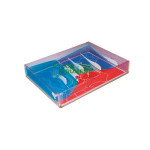
Terrain Geomorphology Model Set is a dual-component diagnostic instrument
engineered for the empirical study of orogenic evolution and denudation.
Designed for Secondary and Vocational TVET curricula, it facilitates the
comparative analysis of ancient mountain structures against modern base
topography under ASTM-standard landform classification. This ISO-compliant
system ensures calibrated accuracy for institutional earth science
laboratories.
Technical Specifications
|
Tender Specification |
OEM Technical Detail |
|
Material Grade |
Ruggedized High-Impact
Thermoplastic (Washable Surface) |
|
Configuration |
2-Part Comparative Set with
Removable Overlays |
|
Visual Taxonomy |
Color-Coded Lithological
Stratigraphy |
|
Dimensions |
Standardized Institutional
Laboratory Scale |
Key Pedagogical Outcomes
·
Removable
Ancient Mountain Overlay:
Enables students to evaluate the volumetric impact of long-term erosion and
weathering on tectonic structures, supporting in "Geomorphological Change
Synthesis."
·
Synchronized
Base and Overlay Comparison: Facilitates the visualization of "Before and After"
lithological states, supporting "Tectonic Evolution."
·
High-Contrast
Color Landform Coding:
Allows for the immediate identification of varying terrestrial elevations and
drainage patterns, reinforcing "Topographic Mapping and Spatial
Analysis" curricula.
International Logistics & Compliance
To maintain the
structural and volumetric integrity of the thermoplastic overlays during
transcontinental maritime transit, all models are secured in impact-resistant
primary packaging and consolidated in export-grade seaworthy crating (ISPM-15
compliant). International procurement documentation includes the Manufacturer’s
Authorization Form (MAF), IQ/OQ/PQ Certification (verifying topographic
accuracy), and User Manuals in English. The set features a tropicalized design,
tested for long-term stability in environments reaching 45°C and 90% Humidity
to ensure zero material warping or pigment delamination in extreme climates.