
Spreader, Rubber Manufacturer,Supplier and Exporter in India
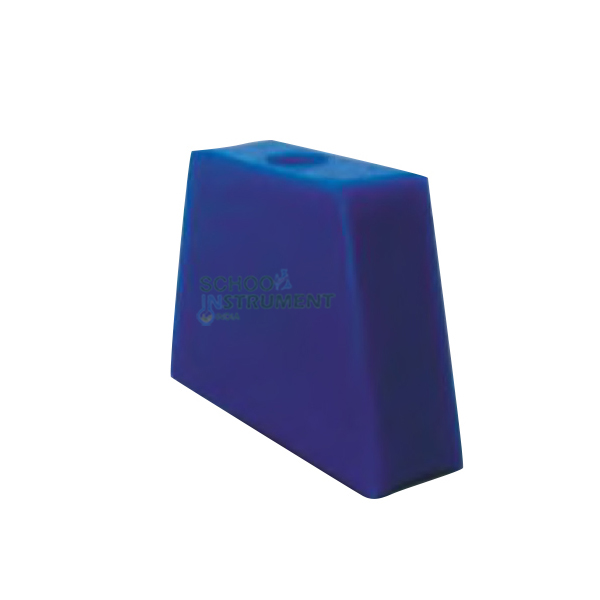
Product Code : SCL-ELE-11924
The Rubber Spreader is
engineered for the uniform distribution of reagents and microbial suspensions
across planar surfaces. Designed for University and Vocational technical
curricula, it features a 5mm internal bore for secure integration with standard
glass stirring rods. This instrument ensures compliance with analytical
precision standards by facilitating consistent thin-film thickness in secondary
and tertiary laboratory modules.
Technical Specifications
|
Tender Specification |
OEM Technical Detail |
|
Material Grade |
Vulcanized Industrial-Grade
Natural Rubber / Chemical-Resistant Elastomer |
|
Internal Bore Diameter |
5mm (Calibrated for standard
lab rods) |
|
Geometry |
T-shaped / Flat-edge profile
for maximized surface contact |
|
Chemical Resistance |
Stable against diluted acids,
bases, and common laboratory stains |
Key Pedagogical Outcomes
·
5mm
Precision Bore: Allows students to
convert standard stirring rods into specialized spreading tools, supporting
"Apparatus Adaptation" and "Modular Lab Design".
·
Flexible
Elastomeric Spreading Edge:
Enables the creation of uniform thin-films, supporting in "Analytical
Microbiology" and "Spectrophotometric Sample Preparation."
·
Friction-Fit
Seal: Prevents reagent
ingress between the rod and rubber interface, reinforcing "Contamination
Control" and "Standard Operating Procedures (SOP)" in Vocational
training.
International Logistics & Compliance
To ensure material
longevity and prevent oxidative perishing during transcontinental maritime
transit, all units are secured in moisture-barrier primary packaging within
export-grade seaworthy crating (ISPM-15 compliant). International procurement
documentation includes the Manufacturer’s Authorization Form (MAF), Certificate
of Conformance (CoC), and IQ/OQ/PQ certification for institutional quality
audits. The component is fully tropicalized; the elastomer substrate is
batch-tested for ozone resistance and thermal stability in environments
reaching 45°C and 90% Humidity to eliminate the risk of structural hardening or
surface tackiness.


